
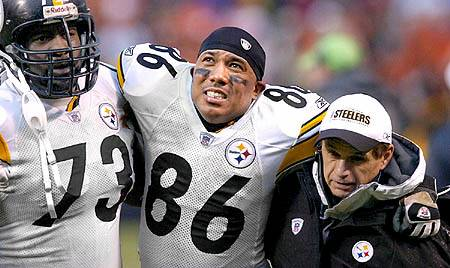
 Dr. Maroon received an athletic scholarship to Indiana University in Bloomington, Indiana where as an undergraduate, he was named a Scholastic All-American in football. Dr. Maroon has successfully maintained his personal athletic interests through participation in 9 marathons and more than 72 Olympic-distance triathlon events. However, his greatest athletic accomplishment is his participation in 8 Ironman triathlons (Hawaii – 1993, 2003, 2008, 2010, 2013; Canada – 1995; New Zealand – 1997; Germany – 2000), where he usually finishes in the top 10 of his age group. Recently, in July 2012 and 2013, he finished second and third, respectively, in his age group in the Muncie, Indiana half Ironman triathlon. In October 2013 he completed his 5th World Championship Ironman in Kona, Hawaii.
Neurotrauma in Naval Special Warfare Combat Crewmen and Fast Boat Operators Now Published
 June 2026 For the last several decades, Neurosurgeon and Concussion Expert, Dr. Joseph Maroon, has investigated, identified and treated thousands of sport-related concussion. As the co-founder of ImPACT Concussion software program, which has been used by millions of athletes world-wide, he is recognized as one of the premier leaders of sport concussion. But the greatest number of concussions, however, are not from sport’s related injuries, but from daily living, such as falls, and perhaps least known are the concussions that occurs in military personal.
Concussion and post-concussion syndrome was actually the hallmark injury of soldiers from the Afghanistan and Iraq Wars. This was due to both the concussive explosions from incoming explosives and the concussive forces that occur when firing large explosives. Other military sources of concussion/ and receptive blows to the head have recently been identified in Navy SEALS and other Special Operations that use specialized boats that travel at high speed in nearly any weather. These specialized units often perform coastal and river patrol and their duties fall under Special Boat Teams operated by Special Warfare Combatant-Craft Crewmen (SWCC). Those that man these boats are also known as Fast boat operators (FBOs)
In this recent article Dr. Maroon discusses his ongoing research to investigate FBOs and determine the extent of possible brain and spine injuries in the form of a medical survey. This will be just part of an multi-year effort to start prospective studies with imaging, biochemical, and cognitive testing to define the true burden of neurotrauma in this population.
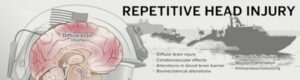
Recent Publication in Neurosurgery 00:1–8, 2026 https://doi.org/10.1227/neu.0000000000004104
ABSTRACT
BACKGROUND AND OBJECTIVES: Fast boat operators (FBOs) are exposed to thousands of high-G impacts while traveling up to 50 to 60 mph over 1- to 6-foot waves for hours at a time. This represents a potential risk factor for repetitive head impacts and traumatic brain injury (TBI). This study evaluates the burden of neurocognitive symptoms among FBOs and their association with a formal TBI diagnosis. METHODS: Two hundred forty-five FBOs were surveyed. The number of months served as an FBO on boat deployments, and the number of respondents diagnosed with TBI during their service were collected. Comparison of exposure and neurocognitive symptom burden between patients with and without TBI was performed through two-sided T-tests and χ2 analyses using Python. RESULTS: One hundred ninety-eight operators(80.8%) responded. Average age was 51.0 ± 10.1. Average years served as an FBO was 12.1 ± 6.4. Average months deployed on fast boats was 91.6 ± 62.9. Ninety operators (45.5%) were medically diagnosed with TBI. TBI diagnosis correlated with the number of years as an FBO (P = .001), months on fast- boat deployments (P = .004), diagnosis of post traumatic stress disorder (P < .001), and diagnosis of cervical spinal stenosis (P = .016). Multiple linear regression analyzing factors associated with neurobehavioral symptom inventory cognitive domain scores showed that TBI was the only factor associated with increased scores (Beta: 1.08, 95% CI: [0.19-1.97], P = .02). CONCLUSION: Our results indicate a significant neurocognitive burden among Special Warfare Combat Crewmen operators; however, compared with the level of symptom burden, relatively few respondents received a formal TBI diagnosis. Physicians caring for FBOs should remain vigilant to ensure that subtle signs of postconcussion syndrome are recognized, return to duty protocols are enforced, and safety measures are adopted to protect FBOs from TBI.
Maroon, Joseph C. MDS(L); Wakelin, Sam; Agarwal, Nitin MD; Smith, Michael Anthony. 493 Occult Neurotrauma in Naval Special Warfare Combat Crewmen and Fast Boat Operators. Neurosurgery 72(Supplement_1):p 145-146, April 2026. | DOI: 10.1227/neu.0000000000003964_493